Universal Life Insurance vs Whole Life Key Differences
A comprehensive comparison of universal life and whole life insurance to help you choose the right permanent policy.
A comprehensive comparison of universal life and whole life insurance to help you choose the right permanent policy.
Universal Life Insurance vs Whole Life Key Differences
Understanding Permanent Life Insurance Options Universal Life and Whole Life
When you're looking into life insurance, especially for long-term financial planning, you'll quickly come across two big players: Universal Life (UL) and Whole Life (WL). Both are types of permanent life insurance, meaning they're designed to last your entire life, as long as premiums are paid. They also both come with a cash value component that can grow over time. But despite these similarities, they're quite different in how they work, their flexibility, and what they might cost you. Choosing between them can feel a bit like picking between two different types of long-term investments – both have their merits, but one might just fit your specific needs better than the other.
Let's dive deep into what makes each of these policies tick, who they're best suited for, and how you can decide which one is the right fit for your financial future, whether you're in the US or Southeast Asia. We'll break down their core features, explore their cash value growth, discuss premium structures, and even look at some real-world examples and pricing considerations.
Whole Life Insurance Explained Guaranteed Growth and Predictability
Whole Life insurance is often considered the most traditional form of permanent life insurance. Think of it as the steady, reliable workhorse of the insurance world. Its main appeal lies in its guarantees. When you buy a whole life policy, your premiums are typically fixed for life, your death benefit is guaranteed, and your cash value is guaranteed to grow at a specified rate, tax-deferred. This predictability is a huge draw for many people, especially those who prefer a hands-off approach to their financial planning.
Key Features of Whole Life Insurance
- Guaranteed Premiums: Your premium payments remain the same for the entire life of the policy. No surprises here!
- Guaranteed Death Benefit: The amount your beneficiaries receive is fixed and won't change, providing certainty for your loved ones.
- Guaranteed Cash Value Growth: The cash value grows at a guaranteed rate, and you can see its projected growth year by year. This cash value can be accessed through loans or withdrawals.
- Dividends: Many whole life policies are 'participating,' meaning the insurance company may pay out dividends to policyholders. While not guaranteed, these dividends can increase your cash value, reduce premiums, or be taken as cash.
- Simplicity: Compared to other permanent policies, whole life is relatively straightforward to understand and manage.
Who is Whole Life Insurance Best For
Whole life insurance is ideal for individuals who prioritize stability, predictability, and guaranteed outcomes. It's a great fit for:
- Those who want a simple, set-it-and-forget-it policy.
- Individuals looking for guaranteed cash value growth that can be used for future needs like retirement income or college funding.
- People who prefer fixed premiums and don't want to worry about market fluctuations affecting their policy.
- Estate planning, as the guaranteed death benefit can be a powerful tool for wealth transfer.
- Families who want to ensure a specific amount of financial protection for their loved ones, without any uncertainty.
Universal Life Insurance Explained Flexibility and Adjustable Coverage
Universal Life insurance, on the other hand, is the more flexible cousin. It offers adjustable premiums and death benefits, allowing you to tailor the policy to your changing financial situation. This flexibility comes from the fact that the policy has a separate cash value account where interest is earned. You can often choose how much premium to pay (within certain limits) and how much death benefit you want, making it adaptable over time.
Key Features of Universal Life Insurance
- Flexible Premiums: You can adjust your premium payments, sometimes even skipping payments if your cash value is sufficient to cover policy costs. This is a huge advantage if your income fluctuates.
- Adjustable Death Benefit: You can increase or decrease your death benefit as your needs change, though increasing it usually requires additional underwriting.
- Cash Value Growth: The cash value grows based on an interest rate set by the insurer, which can fluctuate. Some UL policies, like Indexed Universal Life (IUL), link their cash value growth to a market index, offering potential for higher returns.
- Transparency: UL policies typically provide a detailed breakdown of costs, including mortality charges, administrative fees, and interest credited.
- Loan and Withdrawal Options: Similar to whole life, you can access your cash value through policy loans or withdrawals.
Who is Universal Life Insurance Best For
Universal life insurance appeals to those who need more adaptability in their life insurance coverage. It's particularly suitable for:
- Individuals whose income or financial needs may change over time.
- Those who want the potential for higher cash value growth than traditional whole life, especially with IUL or VUL policies.
- People who want the option to pay less into their policy during lean times or more during prosperous times.
- Business owners or self-employed individuals with variable income streams.
- Anyone looking for a permanent policy that can be customized to evolving life stages.
Comparing the Core Differences Whole Life vs Universal Life
Now that we've looked at each type individually, let's put them side-by-side to highlight their key distinctions. This comparison will help you see where each policy truly shines and where it might fall short for your specific circumstances.
Premium Structure and Flexibility
- Whole Life: Fixed premiums, guaranteed for the life of the policy. You know exactly what you'll pay every month or year. This offers budgeting certainty.
- Universal Life: Flexible premiums. You can often pay more or less than the target premium, as long as the cash value can cover the policy's costs. This flexibility can be a double-edged sword; while it offers adaptability, it also requires more active management to ensure the policy doesn't lapse.
Cash Value Growth and Interest Rates
- Whole Life: Guaranteed cash value growth at a fixed rate. This growth is predictable and not tied to market performance. Dividends, if paid, can enhance this growth.
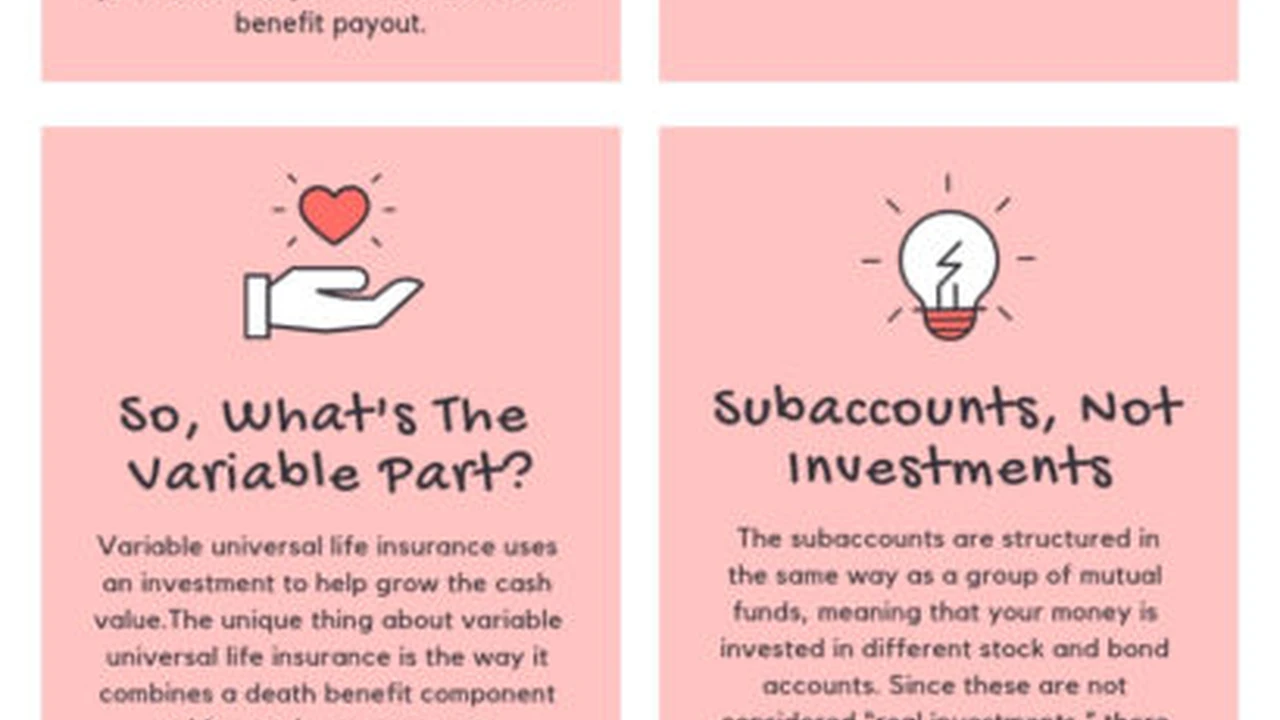
- Universal Life: Cash value growth is based on an interest rate set by the insurer, which can fluctuate. For Indexed Universal Life (IUL), growth is linked to a market index (like the S&P 500) with a floor (minimum interest rate) and a cap (maximum interest rate), offering potential for higher returns without direct market risk. Variable Universal Life (VUL) allows you to invest the cash value in sub-accounts, similar to mutual funds, offering the highest growth potential but also the highest risk.
Death Benefit Adjustments
- Whole Life: The death benefit is typically fixed and guaranteed from the outset. Changes are usually not possible without purchasing a new policy or adding riders.
- Universal Life: The death benefit can often be increased or decreased. Increasing it usually requires new underwriting to assess insurability, while decreasing it is generally simpler. This allows the policy to adapt to changing family needs or financial obligations.
Risk and Guarantees
- Whole Life: Offers the most guarantees – guaranteed premiums, guaranteed death benefit, and guaranteed cash value growth. This makes it a very low-risk option from the policyholder's perspective.
- Universal Life: While the death benefit can be guaranteed (especially with Guaranteed Universal Life, or GUL), the cash value growth is generally not guaranteed and can fluctuate. IUL policies have floors and caps, mitigating some risk but still not offering the same predictability as whole life. VUL policies carry significant investment risk, as the cash value can decrease if the underlying investments perform poorly.
Complexity and Management
- Whole Life: Relatively simple and requires minimal ongoing management once purchased.
- Universal Life: More complex due to its flexible nature and varying interest crediting methods. It often requires more active monitoring to ensure the policy remains adequately funded and doesn't lapse, especially if you're adjusting premiums.
Specific Product Recommendations and Use Cases
Let's look at some hypothetical product examples and how they might be used in different scenarios, keeping in mind that actual product names and features vary by insurer and region.
For the US Market
Whole Life Example: 'Guardian Whole Life' or 'MassMutual Whole Life'
- Use Case: A 35-year-old professional couple with young children wants to ensure a guaranteed death benefit for their family and build a predictable, tax-deferred cash value for future needs like college funding or supplemental retirement income. They value stability and don't want to worry about market volatility.
- Features: Fixed premiums, guaranteed death benefit (e.g., $500,000), guaranteed cash value growth (e.g., 3-4% annually), and potential for non-guaranteed dividends.
- Pricing (Illustrative): For a healthy 35-year-old male, a $500,000 policy might cost around $400-$600 per month, depending on the insurer and specific riders.
- Why it fits: The guarantees provide peace of mind, and the steady cash value growth offers a reliable financial asset. Dividends can further enhance returns over the long term.
Universal Life Example: 'Pacific Life Pacific Indexed UL' or 'Transamerica Financial Foundation IUL'
- Use Case: A 40-year-old entrepreneur with fluctuating income wants a permanent life insurance policy that offers flexibility in premium payments and the potential for higher cash value growth linked to market performance, without direct market risk. They also want the option to access cash value for business opportunities or retirement.
- Features: Flexible premiums, adjustable death benefit (e.g., $750,000), cash value growth linked to an index like the S&P 500 (with a 0% floor and a 10-12% cap), and access to cash value via loans or withdrawals.
- Pricing (Illustrative): For a healthy 40-year-old male, a $750,000 IUL policy might have a target premium of $500-$800 per month, but they could pay more or less within certain limits.
- Why it fits: The flexibility allows them to adjust payments during lean months, and the indexed growth offers better potential returns than traditional UL, while the floor protects against market downturns.
For the Southeast Asia Market (e.g., Singapore, Malaysia)
Whole Life Example: 'Prudential PruLife' or 'Great Eastern Whole Life'
- Use Case: A 45-year-old professional in Singapore wants to secure a guaranteed legacy for their family and use the policy as a long-term savings vehicle. They appreciate the certainty of fixed premiums and guaranteed returns in a stable financial product.
- Features: Guaranteed death benefit (e.g., SGD 700,000), fixed premiums, guaranteed cash value growth, and often includes a participating feature for potential bonuses/dividends.
- Pricing (Illustrative): For a healthy 45-year-old male, a SGD 700,000 policy might range from SGD 800-1,200 per month, depending on the insurer and specific plan.
- Why it fits: Provides a secure financial foundation for the family and acts as a disciplined savings tool with predictable returns, which is often valued in Asian markets.
Universal Life Example: 'Manulife ManuLife Universal Life' or 'AIA Universal Life'
- Use Case: A high-net-worth individual in Malaysia, aged 50, is looking for a flexible wealth transfer solution that can also provide liquidity. They want the ability to adjust their contributions and potentially grow their wealth more aggressively than traditional whole life.
- Features: High death benefit (e.g., MYR 2,000,000), flexible premium payments, cash value growth based on declared interest rates (which can be higher than whole life but not guaranteed), and options for policy loans.
- Pricing (Illustrative): For a healthy 50-year-old male, a MYR 2,000,000 UL policy might have a target premium of MYR 3,000-5,000 per month, with the option to vary payments.
- Why it fits: The flexibility allows for strategic funding, and the potential for higher interest rates on the cash value can be attractive for wealth accumulation and transfer, especially for those with significant assets.
Factors to Consider When Choosing Your Permanent Life Insurance
Making the right choice between Universal Life and Whole Life isn't just about understanding their features; it's about aligning those features with your personal financial goals, risk tolerance, and life circumstances. Here are some crucial factors to weigh:
Your Financial Goals and Objectives
- Guaranteed Legacy: If your primary goal is to leave a guaranteed, specific amount of money to your heirs, whole life's fixed death benefit is a strong contender.
- Wealth Accumulation: If you're looking for a policy that can also serve as a significant wealth-building tool with potential for higher returns, especially for retirement or other large expenses, certain types of universal life (like IUL or VUL) might be more appealing, though they come with varying levels of risk.
- Estate Planning: Both can be used for estate planning, but whole life's predictability can be advantageous for specific tax strategies or charitable giving.
Risk Tolerance and Market Exposure
- Risk-Averse: If you prefer certainty and dislike market fluctuations, whole life insurance with its guaranteed rates is likely your best bet.
- Comfortable with Risk: If you're comfortable with some level of market exposure for potentially higher returns, an Indexed Universal Life (IUL) or Variable Universal Life (VUL) policy might align better with your risk profile. Remember, VUL carries direct investment risk.
Budget and Premium Flexibility
- Fixed Budget: If you have a stable income and prefer consistent, predictable payments, whole life's fixed premiums are ideal for budgeting.
- Variable Income: If your income fluctuates (e.g., self-employed, commission-based), universal life's flexible premium options can be a lifesaver, allowing you to adjust payments as needed.
Need for Control and Management
- Hands-Off Approach: If you prefer to set up your policy and not worry about actively managing it, whole life is simpler.
- Active Management: If you're comfortable monitoring your policy's performance and making adjustments to premiums or death benefits, universal life offers that level of control.
Long-Term vs Short-Term Needs
- Lifelong Coverage: Both provide lifelong coverage, but consider how your needs might evolve. Universal life's adjustability can be beneficial if you anticipate significant changes in your financial situation or family structure.
- Specific Time Horizon: While both are permanent, if you have a very specific long-term goal (e.g., funding a grandchild's education in 20 years), the predictable growth of whole life might be easier to plan around.
The Importance of Riders and Customization
No matter which type of permanent life insurance you choose, remember that policies can often be customized with riders. These are additional benefits that can be added to your policy, often for an extra cost, to enhance your coverage. Common riders include:
- Waiver of Premium Rider: Waives premiums if you become disabled and can't work.
- Accelerated Death Benefit Rider: Allows you to access a portion of your death benefit early if you're diagnosed with a terminal illness.
- Long-Term Care Rider: Provides funds to cover long-term care expenses.
- Guaranteed Insurability Rider: Allows you to purchase additional coverage at certain life events without further medical exams.
- Child Rider: Provides a small amount of term life insurance coverage for your children.
Discussing these options with an experienced insurance advisor can help you tailor your policy to meet very specific needs, adding another layer of protection and value.
Navigating the Application Process and Underwriting
Regardless of whether you choose whole life or universal life, the application process will typically involve underwriting. This is how the insurance company assesses your risk. It usually includes:
- Application Form: Detailed questions about your health, lifestyle, and financial situation.
- Medical Exam: Often includes a physical, blood and urine tests, and sometimes an EKG.
- Medical Records: The insurer may request records from your doctor.
- Motor Vehicle Report: To check your driving history.
- Prescription Drug History: To see what medications you've been prescribed.
The results of underwriting will determine your insurability and the premium rates you'll be offered. Being honest and thorough during this process is crucial to avoid issues later on.
Final Thoughts on Choosing Your Permanent Life Insurance
Deciding between Universal Life and Whole Life insurance is a significant financial decision that impacts your long-term security and wealth planning. There's no single 'best' option; the ideal choice depends entirely on your individual circumstances, financial goals, and comfort level with risk and flexibility. Whole life offers unparalleled guarantees and predictability, making it a solid choice for those who value stability above all else. Universal life, with its various forms, provides greater flexibility and the potential for higher cash value growth, appealing to those whose needs may change or who are comfortable with a bit more complexity and market exposure.
The best approach is to thoroughly understand both options, assess your personal situation, and then consult with a qualified financial advisor or insurance professional. They can help you analyze your needs, compare specific policy illustrations from different providers, and guide you toward the permanent life insurance solution that truly aligns with your financial future, whether you're building a legacy in the US or securing wealth in Southeast Asia.
:max_bytes(150000):strip_icc()/277019-baked-pork-chops-with-cream-of-mushroom-soup-DDMFS-beauty-4x3-BG-7505-5762b731cf30447d9cbbbbbf387beafa.jpg)