Life Insurance and Taxes What You Need to Know
Understand the tax implications of life insurance policies, including death benefits and cash value growth.

Understand the tax implications of life insurance policies, including death benefits and cash value growth.
Life Insurance and Taxes What You Need to Know
Navigating the world of life insurance can feel like a maze, and when you throw taxes into the mix, it often becomes even more complex. Many people purchase life insurance primarily for the death benefit, ensuring their loved ones are financially secure after they’re gone. However, life insurance policies, especially those with a cash value component, can have significant tax implications that are crucial to understand. This comprehensive guide will break down everything you need to know about life insurance and taxes, covering death benefits, cash value growth, withdrawals, loans, and even specific policy types. We’ll also look at how these rules apply in the US and touch upon general principles relevant to Southeast Asian markets.
Understanding Life Insurance Death Benefits and Tax Exemptions
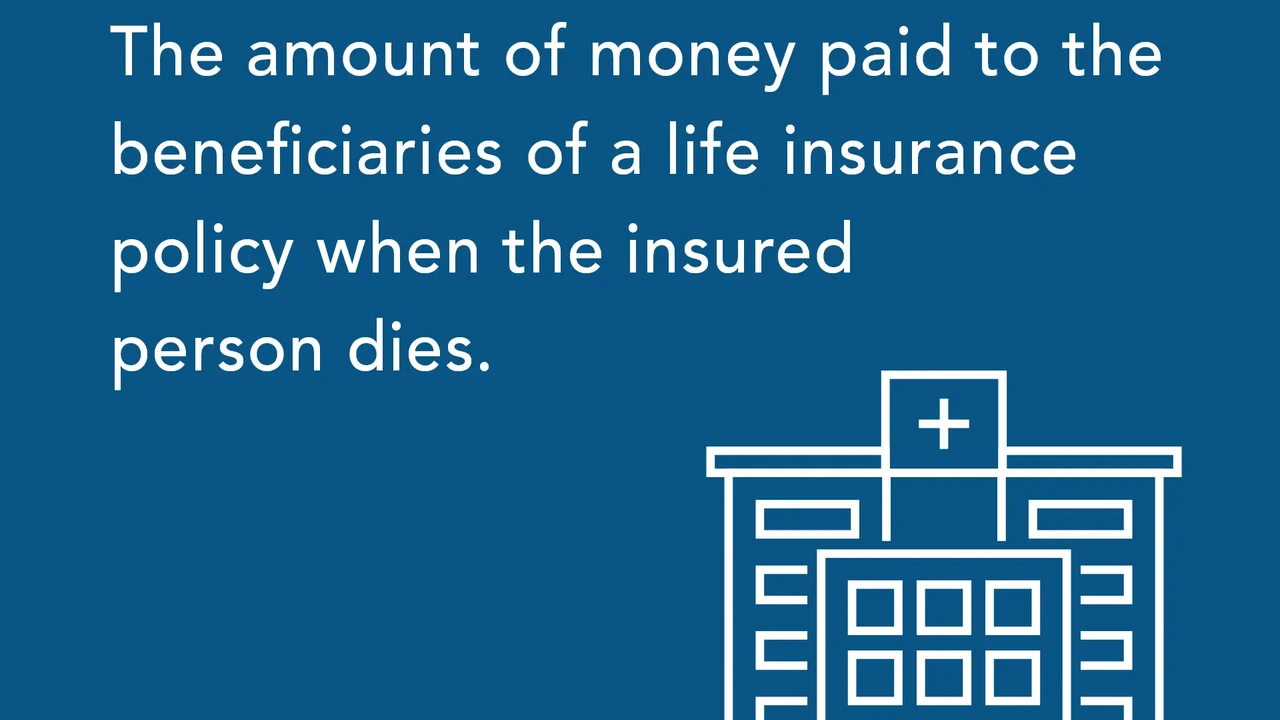
One of the most attractive features of life insurance is the tax treatment of its death benefit. Generally, the death benefit paid to beneficiaries is income tax-free. This is a huge advantage, as it means your loved ones receive the full amount intended, without having to pay a portion to the government. This rule applies to most types of life insurance, whether it’s term life, whole life, or universal life.
For example, if you have a $1 million life insurance policy and pass away, your beneficiaries will typically receive the entire $1 million without it being subject to federal income tax. This tax-free payout is a cornerstone of why life insurance is such an effective tool for financial planning and wealth transfer.
However, there are a few exceptions and nuances to be aware of:
- Estate Tax: While the death benefit is generally income tax-free for the beneficiary, it might be included in the deceased’s taxable estate for estate tax purposes. In the US, the federal estate tax exemption is quite high (e.g., $13.61 million per individual in 2024), so most estates won't owe federal estate tax. However, some states have their own estate or inheritance taxes with lower thresholds. If the policy owner is also the insured and holds incidents of ownership (like the right to change beneficiaries or surrender the policy), the death benefit is usually included in their estate. To avoid this, some people use an Irrevocable Life Insurance Trust (ILIT) to own the policy.
- Transfer-for-Value Rule: If a life insurance policy is transferred for valuable consideration (i.e., sold), the death benefit may become taxable to the extent it exceeds the consideration paid and subsequent premiums. This rule is complex and has exceptions, so it’s important to consult with a tax professional if you’re considering transferring ownership of a policy.
- Interest on Death Benefit: If the insurer holds the death benefit for a period and pays interest on it before distributing it to the beneficiary, that interest income is taxable to the beneficiary.
In Southeast Asian countries, the tax treatment of death benefits can vary. For instance, in Singapore, death benefits from life insurance policies are generally not subject to income tax. In Malaysia, death benefits are also typically tax-exempt. However, it's always best to check local tax laws or consult with a financial advisor in the specific country, as regulations can change and vary.
Cash Value Growth and Tax Deferral in Permanent Life Insurance
Permanent life insurance policies, such as whole life and universal life, include a cash value component that grows over time on a tax-deferred basis. This means you don't pay taxes on the annual growth of the cash value as it accumulates. Taxes are only due when you access the cash value in certain ways, or if the policy is surrendered for more than the premiums paid.
This tax-deferred growth is a significant advantage, allowing your money to compound more efficiently over the long term compared to taxable investments. Think of it like a retirement account where your investments grow without annual taxation.
Whole Life Insurance Cash Value and Tax Implications
Whole life insurance offers guaranteed cash value growth, often with a fixed interest rate or through dividends. The growth is tax-deferred. If you surrender a whole life policy, any amount received that exceeds the total premiums paid (your cost basis) will be taxed as ordinary income. For example, if you paid $50,000 in premiums and surrender the policy for $60,000, the $10,000 gain would be taxable.
Dividends paid by participating whole life policies are generally considered a return of premium and are therefore tax-free, up to the amount of premiums paid. If dividends exceed the total premiums paid, the excess would be taxable.
Universal Life Insurance Cash Value and Tax Implications
Universal life insurance also offers tax-deferred cash value growth, but its growth mechanism can vary. For traditional universal life, the cash value grows based on an interest rate declared by the insurer. Indexed universal life (IUL) links its cash value growth to a market index, offering potential for higher returns while typically providing downside protection. Variable universal life (VUL) allows you to invest the cash value in sub-accounts, similar to mutual funds, offering the highest growth potential but also the most risk.
The tax treatment for surrendering a universal life policy is similar to whole life: any gain above your cost basis is taxable as ordinary income.
Accessing Cash Value Tax Efficiently Loans and Withdrawals
One of the most appealing aspects of permanent life insurance is the ability to access the cash value during your lifetime. There are two primary ways to do this: policy loans and withdrawals.
Life Insurance Policy Loans and Tax Benefits
Taking a loan against your life insurance policy's cash value is generally tax-free. This is because it's considered a loan, not a distribution of earnings. You typically don't need to qualify for the loan, and you can repay it on your own schedule, or not at all. If you don't repay the loan, the outstanding loan amount and any accrued interest will be deducted from the death benefit when the insured passes away.
However, there's a crucial caveat: if the policy lapses with an outstanding loan, the loan amount that exceeds your cost basis can become taxable. This is known as a 'taxable lapse' and can result in a significant tax bill. It's essential to manage policy loans carefully to avoid this situation.
Example Scenario: Sarah has a whole life policy with a cash value of $100,000 and has paid $60,000 in premiums. She needs $20,000 for a home renovation. She can take a $20,000 loan from her policy. This loan is tax-free. If she repays it, her cash value and death benefit remain intact. If she doesn't, and the policy remains in force, the $20,000 (plus interest) will be deducted from the death benefit. If the policy were to lapse with the loan outstanding, and the cash value less the loan was less than her premiums paid, she might face a taxable event on the $20,000 loan amount.
Life Insurance Withdrawals and Tax Implications
You can also make withdrawals from your life insurance policy's cash value. Withdrawals are generally treated on a 'first-in, first-out' (FIFO) basis. This means that withdrawals are considered a return of your premiums (your cost basis) first, and these are tax-free. Once you've withdrawn an amount equal to your total premiums paid, any subsequent withdrawals are considered taxable income.
Unlike loans, withdrawals permanently reduce the policy's cash value and death benefit. If you withdraw too much, you could inadvertently cause the policy to lapse, which could trigger a taxable event on any gains.
Example Scenario: David has a universal life policy with a cash value of $80,000 and has paid $50,000 in premiums. He needs $30,000 for an emergency. He can withdraw $30,000. This withdrawal is tax-free because it's less than his $50,000 cost basis. His cash value would reduce to $50,000, and his death benefit would also decrease proportionally.
Modified Endowment Contracts MECs and Their Tax Consequences
A Modified Endowment Contract (MEC) is a life insurance policy that has been 'overfunded' according to IRS rules. If a policy becomes a MEC, its tax treatment changes significantly, primarily affecting withdrawals and loans.
For a MEC, withdrawals and loans are taxed on a 'last-in, first-out' (LIFO) basis. This means that any money taken out is considered taxable gain first, up to the amount of gain in the policy. Additionally, withdrawals and loans from a MEC made before age 59½ may be subject to a 10% penalty tax, similar to early withdrawals from a 401(k) or IRA.
The purpose of MEC rules is to prevent people from using life insurance primarily as a tax-advantaged investment vehicle rather than for its primary purpose of providing a death benefit. Insurance companies are required to test policies to ensure they don't become MECs, and they will typically notify you if your premium payments are approaching the MEC limits.
Specific Policy Types and Their Unique Tax Considerations
While the general rules apply, some policy types have specific tax nuances worth noting.
Indexed Universal Life IUL and Tax Advantages
Indexed Universal Life (IUL) policies have gained popularity due to their potential for market-linked growth with downside protection. The cash value growth in an IUL is tax-deferred, and you can access it through tax-free loans, similar to other permanent policies. This makes IUL an attractive option for those looking for tax-advantaged accumulation and distribution strategies, especially for retirement income planning. However, it's crucial to understand the fees and caps associated with IUL policies, as these can impact actual returns.
Variable Universal Life VUL and Investment Taxation
Variable Universal Life (VUL) policies allow policyholders to invest their cash value in various sub-accounts. While the growth within these sub-accounts is tax-deferred, VUL policies carry investment risk. If the sub-accounts perform poorly, the cash value can decrease, and you could even lose money. The tax treatment of death benefits, loans, and withdrawals generally follows the rules for other universal life policies, but the investment component adds another layer of complexity.
Term Life Insurance and Tax Simplicity
Term life insurance is the simplest form of life insurance from a tax perspective. It does not build cash value, so there are no tax implications related to cash value growth, withdrawals, or loans. The death benefit, like other life insurance policies, is generally income tax-free to the beneficiaries. This simplicity is one reason why term life is often recommended for pure protection needs.
Life Insurance in Estate Planning and Tax Minimization Strategies
Life insurance plays a vital role in estate planning, particularly for minimizing estate taxes and ensuring a smooth transfer of wealth. As mentioned earlier, while the death benefit is income tax-free, it can be included in your taxable estate. Here are some strategies to mitigate potential estate taxes:
- Irrevocable Life Insurance Trust ILIT: An ILIT is a trust that owns your life insurance policy. Since you don't own the policy, the death benefit is typically excluded from your taxable estate. The trust then distributes the funds to your beneficiaries according to your wishes. This is a common strategy for high-net-worth individuals.
- Gifting Premiums: If an ILIT owns the policy, you would typically gift money to the trust to pay the premiums. These gifts can be structured to fall within the annual gift tax exclusion (e.g., $18,000 per recipient in 2024), avoiding gift taxes.
- Using Life Insurance to Pay Estate Taxes: Even if the death benefit is included in the estate, life insurance can provide liquid funds to pay estate taxes, preventing the need to sell illiquid assets (like a family business or real estate) at a discount.
Tax Implications for Business Owners and Life Insurance
Business owners often use life insurance for various purposes, each with its own tax considerations.
Key Person Life Insurance and Tax Deductibility
Key person life insurance protects a business from the financial loss that would occur if a critical employee (the 'key person') were to die. The business typically owns the policy, pays the premiums, and is the beneficiary. Premiums paid for key person insurance are generally not tax-deductible for the business. However, the death benefit received by the business is usually tax-free.
Buy Sell Agreements and Life Insurance Funding
Life insurance is commonly used to fund buy-sell agreements, which ensure a smooth transition of ownership when a business partner dies. The tax treatment here depends on how the agreement is structured (e.g., cross-purchase vs. entity purchase). Generally, premiums are not deductible, and death benefits are tax-free. The proceeds provide the surviving owners or the business with the funds to purchase the deceased owner's share from their estate.
Comparing Life Insurance Products and Their Tax Profiles
Let's look at some popular life insurance products and how their tax profiles might influence your choice, along with some hypothetical pricing and use cases. Please note that actual premiums vary widely based on age, health, coverage amount, and insurer.
1. Term Life Insurance
- Tax Profile: Simplest. Death benefit is generally income tax-free. No cash value, so no tax on growth, withdrawals, or loans.
- Use Case: Pure protection for a specific period (e.g., during child-rearing years, mortgage repayment).
- Example Product: Haven Life Term Life Insurance (US Market).
- Hypothetical Pricing (Healthy 35-year-old, non-smoker, $500,000 coverage, 20-year term): Approximately $25-$40 per month.
- Why it's good: Affordable, straightforward, and provides a tax-free death benefit for your beneficiaries.
2. Whole Life Insurance
- Tax Profile: Tax-deferred cash value growth. Tax-free death benefit. Tax-free policy loans. Withdrawals are tax-free up to cost basis, then taxable. Dividends are generally tax-free up to cost basis.
- Use Case: Lifelong coverage, guaranteed cash value growth, estate planning, wealth transfer.
- Example Product: MassMutual Whole Life Insurance (US Market).
- Hypothetical Pricing (Healthy 35-year-old, non-smoker, $500,000 coverage): Approximately $400-$600 per month.
- Why it's good: Provides guarantees, builds cash value that can be accessed tax-free via loans, and offers a stable component in a financial plan.
3. Indexed Universal Life IUL Insurance
- Tax Profile: Tax-deferred cash value growth linked to market index. Tax-free death benefit. Tax-free policy loans. Withdrawals are tax-free up to cost basis, then taxable. Potential for MEC status if overfunded.
- Use Case: Long-term cash accumulation, retirement income planning, flexible premiums, death benefit protection.
- Example Product: Pacific Life Pacific Indexed Advantage 6 IUL (US Market).
- Hypothetical Pricing (Healthy 35-year-old, non-smoker, $500,000 coverage, designed for cash accumulation): Approximately $300-$500 per month.
- Why it's good: Offers market upside potential without direct market risk, tax-deferred growth, and tax-free access to cash value for retirement or other needs.
4. Guaranteed Universal Life GUL Insurance
- Tax Profile: Tax-deferred cash value growth (though often minimal as it's designed for guarantees). Tax-free death benefit. Tax-free policy loans. Withdrawals are tax-free up to cost basis, then taxable.
- Use Case: Lifelong coverage with guaranteed premiums and death benefit, often at a lower cost than whole life, without significant cash value accumulation focus.
- Example Product: Protective Custom Choice UL (US Market).
- Hypothetical Pricing (Healthy 35-year-old, non-smoker, $500,000 coverage, guaranteed to age 121): Approximately $200-$350 per month.
- Why it's good: Provides guaranteed lifelong coverage at a more predictable cost than traditional UL, without the investment risk of VUL or the higher premiums of whole life.
Important Considerations for Southeast Asian Markets
While the general principles of life insurance taxation often share similarities globally, specific rules and regulations can differ significantly in Southeast Asian markets. For example:
- Singapore: Death benefits are generally not taxable. Cash value growth is also typically not taxed as long as the policy remains in force. However, if a policy is surrendered, any gains might be subject to income tax.
- Malaysia: Death benefits from life insurance policies are generally tax-exempt. Investment-linked policies (similar to UL/VUL) may have different tax treatments for the investment component, so it's crucial to understand the specific policy terms.
- Thailand: Life insurance death benefits are typically exempt from income tax. However, certain types of investment-linked policies might have tax implications on the investment gains.
- Philippines: Death benefits are generally exempt from income tax. However, the proceeds might be subject to estate tax if the policy is owned by the insured and payable to the estate.
It is always recommended to consult with a local financial advisor or tax professional in the specific Southeast Asian country to understand the precise tax implications of any life insurance policy you are considering. Tax laws are dynamic and can change, so up-to-date local advice is invaluable.
Navigating the Complexities of Life Insurance Taxation
Understanding the tax implications of life insurance is not just about avoiding pitfalls; it's about maximizing the benefits of your policy. Whether you're looking for pure protection with term life, guaranteed growth with whole life, or flexible accumulation with universal life, knowing how taxes affect your policy's death benefit, cash value, and access options is paramount.
For most people, the tax-free death benefit is the primary draw. For those considering permanent policies, the tax-deferred cash value growth and the ability to access funds tax-free through loans offer powerful financial planning tools. However, being aware of potential issues like MEC status and taxable lapses is crucial for effective management.
Always remember that tax laws are complex and can change. What's true today might be different tomorrow. Therefore, working with a qualified financial advisor and a tax professional is highly recommended. They can help you structure your life insurance policies in the most tax-efficient way, ensuring your financial goals are met and your loved ones are protected without unexpected tax burdens. Don't hesitate to ask questions and seek expert guidance to make informed decisions about your life insurance and its tax implications.
:max_bytes(150000):strip_icc()/277019-baked-pork-chops-with-cream-of-mushroom-soup-DDMFS-beauty-4x3-BG-7505-5762b731cf30447d9cbbbbbf387beafa.jpg)