The Best Universal Life Insurance for Estate Planning
Explore how indexed universal life insurance can be utilized as a tool for tax-advantaged retirement planning.

Explore how indexed universal life insurance can be utilized as a tool for tax-advantaged retirement planning.
H2 Understanding Indexed Universal Life Insurance IUL Basics
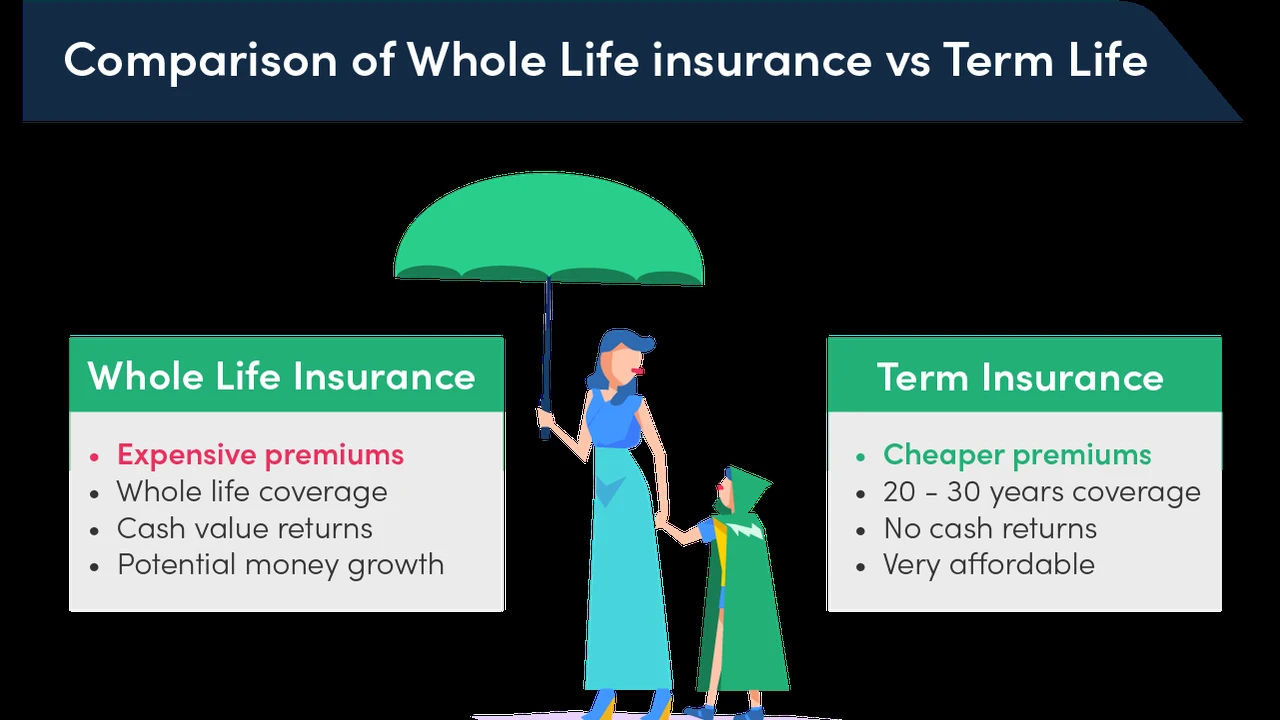
Indexed Universal Life (IUL) insurance has emerged as a popular financial product, particularly for those looking to combine life insurance protection with a component for retirement savings. Unlike traditional whole life insurance, which offers guaranteed but often modest cash value growth, or variable universal life, which directly invests in sub-accounts and carries market risk, IUL offers a unique middle ground. It provides a death benefit, like all life insurance, but its cash value growth is linked to the performance of a market index, such as the S&P 500, without directly investing in the stock market. This linkage typically comes with a floor (a minimum guaranteed interest rate, often 0% or 1%) to protect against market downturns and a cap (a maximum interest rate) that limits upside potential. This structure aims to offer participation in market gains while providing a degree of principal protection.
The primary appeal of IUL for retirement planning lies in its tax advantages. The cash value grows on a tax-deferred basis, meaning you don't pay taxes on the gains until you withdraw them. Furthermore, policyholders can typically access the cash value through tax-free loans and withdrawals during retirement, provided the policy is structured and managed correctly. This can be a significant advantage over other retirement vehicles like 401(k)s or IRAs, which are subject to income taxes upon withdrawal in retirement. The death benefit also passes to beneficiaries income tax-free, offering an additional layer of financial security for your loved ones.
H2 Why Consider IUL for Retirement Planning Tax Advantages and Flexibility
When it comes to retirement planning, IUL offers several compelling benefits that differentiate it from other options. The most significant is its tax-advantaged growth and access to funds. As mentioned, the cash value grows tax-deferred, and withdrawals or loans can be taken tax-free. This is particularly attractive for high-income earners who may be looking for additional tax-efficient savings vehicles beyond traditional qualified plans, which often have contribution limits.
Another key advantage is flexibility. IUL policies allow for adjustable premiums and death benefits, meaning you can modify your contributions and coverage as your financial situation changes. This adaptability is crucial for long-term planning, as life circumstances can evolve significantly over decades. For instance, if you experience a period of financial hardship, you might be able to reduce or even skip premium payments by utilizing the policy's cash value. Conversely, if you have a windfall, you can contribute more to accelerate cash value growth.
Moreover, IUL can provide a supplemental income stream in retirement. By taking tax-free loans against the cash value, you can create a predictable income flow that complements your other retirement savings. This can be particularly useful for bridging income gaps or covering unexpected expenses without incurring additional tax liabilities. The death benefit also ensures that your family is protected, even as you utilize the cash value for your own retirement needs.
H2 How IUL Cash Value Grows Index Linking and Participation Rates
The growth mechanism of IUL's cash value is central to its appeal. Instead of directly investing in the market, the interest credited to your cash value is linked to the performance of a chosen market index. Common indices include the S&P 500, NASDAQ 100, or a blend of indices. It's crucial to understand that you are not actually investing in these indices; rather, the insurance company uses the index's performance to determine the interest rate credited to your policy.
This linkage comes with specific parameters: a floor and a cap. The floor is the minimum interest rate you will receive, typically 0% or 1%. This means that even if the market index performs negatively, your cash value will not lose money due to market downturns. This principal protection is a significant differentiator from direct market investments. The cap, on the other hand, is the maximum interest rate you can earn in a given period, regardless of how well the index performs. For example, if the cap is 10% and the S&P 500 returns 15%, your cash value will only be credited with 10% interest.
Some policies also use a 'participation rate' instead of or in conjunction with a cap. A participation rate determines what percentage of the index's gains will be credited to your policy. For instance, a 70% participation rate means if the index gains 10%, your policy will be credited with 7% interest (assuming no cap is hit). Understanding these mechanics – the floor, cap, and participation rate – is vital for evaluating the potential growth of an IUL policy.
H2 Accessing IUL Funds in Retirement Loans and Withdrawals
One of the most attractive features of IUL for retirement planning is the ability to access your accumulated cash value on a tax-advantaged basis. There are two primary ways to do this: policy loans and withdrawals.
Policy Loans: Taking a loan against your IUL policy's cash value is generally the preferred method for accessing funds in retirement. These loans are typically tax-free, as they are considered debt, not income. You are essentially borrowing money from the insurance company, using your cash value as collateral. The cash value continues to grow, even while you have a loan outstanding, though the loan itself will accrue interest. You are not required to repay the loan, but any outstanding loan balance at the time of your death will reduce the death benefit paid to your beneficiaries. This method offers significant flexibility and tax efficiency.
Withdrawals: You can also make direct withdrawals from your IUL policy's cash value. Withdrawals are generally tax-free up to your 'cost basis' (the total amount of premiums you've paid into the policy). Any withdrawals exceeding your cost basis will be subject to income tax. While withdrawals offer immediate access to funds, they reduce the policy's cash value and death benefit directly. For this reason, policy loans are often favored for retirement income planning, as they preserve the cash value's growth potential and maintain a higher death benefit.
It's crucial to work with a financial advisor to structure your IUL policy and withdrawal strategy carefully to maximize tax efficiency and ensure the policy remains in force throughout your retirement. Improper management can lead to the policy lapsing, which could trigger significant tax liabilities.
H2 Comparing IUL with Other Retirement Vehicles 401k IRA and Roth
To truly appreciate the role of IUL in retirement planning, it's helpful to compare it with more traditional retirement vehicles like 401(k)s, IRAs, and Roth accounts.
401(k)s and Traditional IRAs: These are pre-tax retirement accounts, meaning contributions are tax-deductible, and growth is tax-deferred. However, withdrawals in retirement are taxed as ordinary income. They also have annual contribution limits and require minimum distributions (RMDs) starting at a certain age. IUL, on the other hand, has no contribution limits (though premiums must be reasonable relative to the death benefit to avoid being classified as a Modified Endowment Contract, or MEC), no RMDs, and offers tax-free access to funds in retirement.
Roth IRAs and Roth 401(k)s: Contributions to Roth accounts are made with after-tax dollars, and qualified withdrawals in retirement are entirely tax-free. This is a significant advantage, similar to the tax-free access offered by IUL. However, Roth accounts also have income limitations for direct contributions (for Roth IRAs) and annual contribution limits. IUL has no income limitations and higher potential contribution amounts, making it a viable option for high-income earners who may be phased out of Roth contributions.
Key Differences:
- Contribution Limits: IUL generally has higher effective contribution limits than qualified plans.
- Taxation: IUL offers tax-deferred growth and tax-free access (via loans), similar to Roth accounts for withdrawals, but with more flexibility.
- Market Exposure: IUL offers principal protection with capped upside, while 401(k)s/IRAs have direct market exposure (and risk).
- Liquidity: IUL cash value can be accessed at any age without penalties (unlike 401(k)s/IRAs before age 59.5), though loans accrue interest.
- Death Benefit: IUL provides a tax-free death benefit, which 401(k)s/IRAs do not.
IUL is often best viewed as a supplemental retirement vehicle, complementing traditional plans, especially for those seeking additional tax-advantaged savings, flexibility, and a death benefit.
H2 Top IUL Products for Retirement Planning Features and Providers
When considering an IUL policy for retirement planning, it's essential to look at specific product features, carrier reputation, and how the policy is structured. Here are a few prominent providers and general features to consider, keeping in mind that specific product names and features can vary and are subject to change.
H3 National Life Group FlexLife II
Features: National Life Group is known for its strong focus on IUL products. Their FlexLife II policy often features competitive caps and participation rates, along with a 0% floor, ensuring no loss due to market downturns. A key selling point is often their 'living benefits' riders, which allow policyholders to access a portion of their death benefit early for critical, chronic, or terminal illnesses. This adds a layer of protection beyond just retirement income. They also offer various index options, allowing for diversification in how your cash value is credited.
Use Case: Ideal for individuals seeking robust living benefits alongside tax-advantaged cash value growth for retirement. Good for those who prioritize protection against health-related financial shocks while building retirement income.
Pricing: Premiums vary widely based on age, health, death benefit amount, and funding strategy. A healthy 40-year-old male looking for a $500,000 death benefit and aiming for significant cash value growth might see annual premiums ranging from $5,000 to $15,000 or more, depending on how aggressively the policy is funded.
H3 Pacific Life Pacific Discovery Xelerator IUL 2
Features: Pacific Life is another major player in the IUL market. Their Pacific Discovery Xelerator IUL 2 (PDX2) is often highlighted for its strong cash accumulation potential. It typically offers a variety of index strategies, including uncapped options with a spread or participation rate, which can provide higher upside potential in strong market years, albeit with potentially higher volatility in credited interest. They also offer competitive loan provisions, which are crucial for tax-free retirement income.
Use Case: Suited for individuals who are comfortable with a slightly more aggressive approach to cash value growth, potentially seeking higher returns in exchange for a different indexing methodology (e.g., uncapped with a spread). Good for those prioritizing maximum cash accumulation for retirement income.
Pricing: Similar to National Life, premiums are highly individualized. For a comparable scenario (healthy 40-year-old male, $500,000 death benefit), annual premiums could range from $6,000 to $18,000, depending on the funding level and chosen index strategies.
H3 Penn Mutual Diversified Growth VUL (Note: While not strictly IUL, it's a strong alternative for growth)
Features: While Penn Mutual is known for its strong whole life products, their Diversified Growth VUL (Variable Universal Life) is worth mentioning as an alternative for those seeking higher growth potential with direct market exposure. VUL allows you to invest directly in sub-accounts, offering potentially higher returns but also carrying market risk (no floor). However, Penn Mutual is a mutual company, meaning policyholders can receive dividends, which can enhance overall returns. It offers similar tax-deferred growth and tax-free loan access.
Use Case: For individuals who are comfortable with market risk and seek potentially higher returns than IUL's capped growth. Best for those who want more control over their investment choices within a life insurance wrapper and are willing to accept market volatility.
Pricing: VUL premiums can be more flexible but also require careful management. For a similar death benefit, premiums might start around $4,000-$10,000 annually, but the investment component means the total cash value growth is directly tied to market performance and investment choices.
H3 Guardian Life Protector IUL
Features: Guardian, another mutual company, offers the Protector IUL, which often emphasizes strong guarantees and a balanced approach to cash value growth. Being a mutual company, Guardian also pays dividends, which can enhance the policy's performance. Their IUL products typically offer a 0% floor and competitive caps, focusing on consistent, stable growth. They also have strong financial ratings, providing peace of mind regarding the company's stability.
Use Case: Ideal for conservative investors who prioritize stability, strong guarantees, and the potential for dividends from a mutual company. Good for those who want a reliable, long-term cash accumulation vehicle with a strong financial backing.
Pricing: Premiums would be in a similar range to other top-tier IUL products, likely from $5,500 to $16,000 annually for the example scenario, depending on the funding structure and desired outcomes.
Important Considerations for All Products:
- Illustration vs. Actual Performance: IUL illustrations show hypothetical future growth based on current index performance and caps. Actual results can vary.
- Fees and Charges: All IUL policies have various fees (cost of insurance, administrative fees, surrender charges). Understand these thoroughly.
- MEC Status: Over-funding an IUL can cause it to become a Modified Endowment Contract (MEC), which changes the tax treatment of withdrawals and loans. Proper funding is crucial.
- Riders: Explore available riders (e.g., living benefits, waiver of premium) to customize your policy.
H2 Structuring Your IUL Policy for Optimal Retirement Income
The success of an IUL policy as a retirement income tool heavily depends on how it's structured and managed. It's not a 'set it and forget it' product. Here are key considerations:
H3 Max Funding and Minimum Death Benefit
To maximize cash value growth, you generally want to 'max fund' the policy while maintaining the lowest possible death benefit allowed by IRS guidelines. This strategy minimizes the cost of insurance (which is deducted from your cash value) and directs more of your premium dollars towards cash accumulation. This is often referred to as 'over-funding' from an insurance perspective, but it's a deliberate strategy for cash value growth.
H3 Avoiding MEC Status
It's critical to avoid your policy becoming a Modified Endowment Contract (MEC). If an IUL becomes a MEC, policy loans and withdrawals lose their tax-free status and are instead taxed on a 'last-in, first-out' (LIFO) basis, and withdrawals before age 59.5 may incur a 10% penalty. Your financial advisor will help you navigate the '7-pay test' to ensure your policy remains non-MEC.
H3 Loan Strategy for Retirement Income
When planning to use IUL for retirement income, a common strategy involves taking policy loans. These loans are typically structured as 'wash loans' or 'arbitrage loans.' A wash loan aims for the loan interest rate to be similar to the rate credited to the collateralized cash value, minimizing the net cost of borrowing. An arbitrage loan seeks to earn a higher rate on the cash value than the loan interest rate, creating a positive spread. Your advisor will help you model these scenarios to create a sustainable, tax-efficient income stream.
H3 Regular Policy Reviews
Market conditions, interest rates, and your personal financial situation can change over time. It's essential to conduct regular reviews (at least annually) of your IUL policy with your financial advisor. This ensures the policy is performing as expected, that the funding strategy is still appropriate, and that it continues to meet your retirement income goals. Adjustments to premiums or loan strategies might be necessary.
H2 Potential Pitfalls and Considerations When Using IUL for Retirement
While IUL offers significant advantages, it's not without its complexities and potential downsides. Being aware of these is crucial for making an informed decision.
H3 Complexity and Fees
IUL policies are more complex than term life insurance or even traditional whole life. Understanding the indexing strategies, caps, floors, participation rates, and various fees (cost of insurance, administrative fees, surrender charges) requires careful study. High fees, especially in the early years, can significantly impact cash value growth if the policy isn't properly funded or managed.
H3 Cap Rate Risk
While the floor protects against losses, the cap limits your upside potential. In strong bull markets, IUL policies will not capture the full market gains, potentially underperforming direct market investments. This 'cap rate risk' means you might miss out on significant growth during periods of high market performance.
H3 Interest Rate Risk
The cap and participation rates are not guaranteed and can be adjusted by the insurance company. If these rates are lowered in the future, it could reduce your cash value growth and impact your projected retirement income. Similarly, loan interest rates can also change, affecting the cost of accessing your funds.
H3 Policy Lapses and Tax Consequences
If an IUL policy is underfunded or if the cash value is depleted too quickly through loans or withdrawals, it can lapse. A lapsed policy means you lose your death benefit, and any outstanding loans or withdrawals that exceeded your cost basis could become immediately taxable, potentially leading to a significant tax bill. Careful management and regular reviews are essential to prevent this.
H3 Not a Short-Term Investment
IUL is a long-term financial product. It takes many years for the cash value to accumulate significantly and for the policy to become efficient. It is not suitable for short-term savings goals or for individuals who may need to access large sums of money within the first 10-15 years due to surrender charges and lower early cash values.
H2 The Future of Your Retirement with IUL Strategic Integration
Integrating Indexed Universal Life insurance into your retirement strategy can be a powerful move, especially for those seeking tax-advantaged growth, flexible access to funds, and a guaranteed death benefit. It's not a replacement for traditional retirement accounts but rather a complementary tool that can enhance your overall financial security.
By understanding its unique features, carefully selecting a reputable provider, and structuring the policy correctly with the guidance of a knowledgeable financial advisor, IUL can serve as a robust component of your retirement portfolio. It offers a blend of market participation with principal protection, a feature not commonly found in other retirement vehicles. The ability to access funds tax-free through loans in retirement provides a valuable income stream, while the death benefit ensures your legacy is protected.
Remember, the key to successful IUL planning lies in long-term commitment, diligent management, and a clear understanding of its mechanics. With the right approach, IUL can help you build a more resilient and tax-efficient retirement future.
:max_bytes(150000):strip_icc()/277019-baked-pork-chops-with-cream-of-mushroom-soup-DDMFS-beauty-4x3-BG-7505-5762b731cf30447d9cbbbbbf387beafa.jpg)